Whatever happened to the happy, shiny suburb known as Walnut Creek?
It has been overcome by a gloves-off, hard-hitting, contact-sport election with several different forces fighting for control of the city's destiny. Yes, I'm talking about the City Council race. Three candidates, Kristina Lawson, Cindy Silva, and Justin Wedel, are fighting for two seats, and the battle grounds have been sharply drawn.
When I started my blog, Crazy in Suburbia in the fall of 2008, I wanted to scratch beneath the shiny, happy surface of this California suburb. As AKA Soccer Mom, I thought my muckracking would focus on despairing alcoholic moms, teen ennui, and hookers working out of downtown condos.
But as editor of Walnut Creek Patch, I wound up covering City Hall and the 2010 Walnut Creek City Council race. I have found that the muckraking now extends to educated professional adults going at it over such issues such as per capita spending on police salaries. And, pointing fingers of blame at one another over who started all this craziness in the first place.
Here are some of the low lights from the election:
Citizens are upset that the campaigning has become too personal and bemoan the negativity and nastiness of the rhetoric coming from different camps--a lot of it said to be posted in anonymous rants on the message boards of Walnut Creek Patch and the Contra Costa Times.
Business owners say they have found themselves caught in the middle of angry candidates and supporters who demand that they hang their campaign signs, not their opponents', in their store windows.
The police, who are trying to oust Silva from office, last week held a highly visible demonstration outside the city's new crown jewel of a library, of which Silva was a strong supporter.
Library supporters, in turn, vented on Facebook about aggressive police tactics and misleading statements.
A former mayor and a police sergeant engaged into a yelling match outside the chambers of City Council during a recent meeting.
Two council members supposedly withdrew their support of one candidate at the request of another candidate
What's it all about, Walnut Creek?
The politics of scarcity? That's what Walnut Creek Patch writer David Mills asserted in his Oct. 13 story.
"In Walnut Creek, the phenomenon has elevated this fall's election into the most contentious City Council campaign since the growth vs. anti-growth battles a quarter-century ago," Mills wrote. "Budget cuts and hiring freezes have sent the city's police officers into the streets to campaign against incumbent Cindy Silva."
In its endorsement of Cindy Silva, the Contra Costa Times asserted that the race has essentially been a battle over police benefits and pension reform.
Silva and the current council approved a contract that would freeze salaries and require police managers--sergeants, lieutenants and captains-- to begin contributing into the CalPERS retirement system to the tune of 7 percent.
But the Times showed signs itself of getting caught up in the madness with an uncharacteristic rant that mostly argued about the need to control spending on public employee pensions. Yes, it is an important issue--one the Times cares about, as do all three council candidates. But the editorial also used disparaging language to blast Walnut Creek police officers for being greedy. Reading between the lines, the Times also was telling the cops to be quiet and to stop rocking the boat. This language wasn't necessary for the Times to finally make its point that it thought Silva had been a thoughtful, hardworking city council member who deserved to be re-elected.
I happen to believe that this race is about those issues and more: the city's economic future, its priorities, neighborhood concerns about new developments, official accountability, and even the general question of what Walnut Creek citizens want their city to be.
More urban? More small town? An arts and culture mecca? A shopper's paradise? A great place to raise a family? A community known for its beautiful parks, pools, and open space?
Or a great place for guys to party on Friday and Saturday nights, get really drunk, and get into fights? Yes, a series of bar fights in early October, involving 50 or more combatants at three different bars, emerged as an issue in the campaign with police saying it shows that the city needs to spend more money on public safety.
Then police asserted that council member Gary Skrel, a Silva supporter, had a "secret" meeting with bar owners, at which owners vowed they wouldn't call police if fights break out until the election is over. Both Skrel and Tony Dudum, owner of the 1515 Restaurant and Lounge, one of the sites of the reported fights, denied hearing owners made any such promise.
The outrage in some circles over Skrel's meeting points to questions some residents have about the accountability of city council members.
Neighborhood representatives have told me that council members have been dismissive of their concerns and treated them in a condescending manner. One neighborhood representative, who asked not to be named, said he has become cynical about the Chamber of Commerce "hand-picking" candidates and perpetuating a one-party system in town. He said he was in some ways grateful to police for shaking things up and challenging the status quo.
This representative is pointing to the widespread perception that there is an In Crowd in Walnut Creek political life. Not surprisingly, members of Walnut Creek's In Crowd will deny it exists.
Perhaps this race, like all local, state and national races, is also reflective of the disaffection citizens have for their elected officials.
In his story, Mills said that Wedel has homed in on the city's budget problems, saying the City Council is "broken." He says city leaders have been on "a spending spree" the past decade. And he says the powers that be--the In Crowd?--want to keep Silva in office and elect Lawson, their "hand-picked candidate," to maintain the status quo.
Lawson, an attorney, has tried to "present a calm counter-argument to those claims," Mills reported. She stresses her experience in civic activities, her knowledge of land-use policy and her ability to work with others.
Silva's main campaign message actually hasn't been about police pensions but about integrity, Mills reported. Silva says she made at least a half-dozen promises when she campaigned four years ago and she has kept them all.
"When I decided to run again, I had to ask myself what did I say I'd do and did I do it," Silva said. "I went through the list. I concluded I made promises and I kept those promises."
I wish good luck to all three candidates on Tuesday. They've all worked hard and endured a lot of the craziness--or perhaps helped to perpetuate it? I expect Walnut Creek voters will make the right decision. For the record, I live just outside the city limits, so I can't vote in this race.
I look forward to when this race is over. But with all the anger and craziness this election as generated, I worry about how much trust has been lost, how many bridges have been burned. Which of the three candidates will do the best job addressing the hard feelings that must now exist at City Hall and among citizens? The incoming city manager, Ken Nordhoff, also will have a lot of repair work to do.
Showing posts with label Walnut Creek city council. Show all posts
Showing posts with label Walnut Creek city council. Show all posts
October 30, 2010


June 15, 2010
As City Council adopts budget.... Some final WC Library numbers: $1.6 million under budget …
At the City Council meeting, Assistant Walnut Creek City Manager Lorie Tinfow reported some final budget numbers on the library as it prepares for its July 17 opening. They include:
--The library will come it at a total cost of $39.9 million
--The original budget, set in January 2007, was $46 million
--Last year, the council reduced the budget to $41.5 million
--The Walnut Creek Library Foundation has raised more than $5 million towards the project.
--The two libraries will be open a total of 56 hours a week.
Oh, and the City Council adopted its 2010-12 budget 4-1, with council member Gary Skrel casting the no vote.
June 2, 2010
Should the city charge fees to bars that stay open late and require a lot of police attention?
I just posted this story on Walnut Creek Patch, dealing with an idea that emerged at last night's City Council meeting.
Council members were talking some more about if and how the city could help pay for the Masters Swim Team, school crossing guards, crisis counselors in Walnut Creek Schools, the Lindsay Museum, the downtown trolley, and the Walnut Creek Concert Band.
The idea has come up that six to 12 bars, which are open past midnight, require a lot of police attention during those late hours, especially on Thursday, Friday and Saturday nights. Maybe these establishments should have to pay a special fee for the impact on public safety they have.
You can read more on this proposed bar fee at Walnut Creek Patch. Some council members think it's a great idea, others are not so sure. It would be great to see some of your comments there too.
Meanwhile, check back later on Walnut Creek Patch to read about how the council is likely to vote on saving or cutting other programs near and dear to many's hearts: the Masters Swim coach's position, school crossing guards, school crisis counselors, the therapeutic recreation summer camp for disabled kids, and the Walnut Creek Concert Band.
May 25, 2010
Wait! WC City Council meets this evening to discuss important budget issues. But, it's Lady Gaga night on "Glee."
And, the final two battle it out for the American Idol crown, taking to the stage to show the judges and America what they're made of. The winner is announced Wednesday night...
But does anyone still care what happens on American Idol? Have you been watching this season, which critics say has been lackluster? I don't know who the two finalists are. My son and I, Idol converts during the past two seasons, lost interest during Hollywood week. And. now Simon Cowell is leaving
 Tonight, what matters is Glee, and its Lady Gaga special, with Kurt in an especially dazzling metallic Gaga outfit belting out "Bad Romance." It can't get any better than that.
I know, I know. I'm being frivolous. At the Walnut Creek City meeting there will be more talk about the budget, and perhaps a presentation by Police Chief Joel Bryden. Last week, we heard from Arts, Recreation and Community Services director Barry Gordon. Maybe more people will come forward to protest cuts to the Masters Swim program or the Lindsay Wildlife Museum. More letters arrived from parents whose kids attend the Therapeutic Recreation summer camp. This is apparently the only camp of its kind for developmentally disabled kids.
Yes, I can catch Glee does Lady Gaga on Hulu in case this meeting goes on late.
But something I wonder about: You know, the Mt. Diablo Unified School District canceled its meeting tonight. The reason given to the Contra Costa Times Theresa Harrington had to do with the board wanting to wait to discuss budget issues until after the June 8 Measure C bond measure election.
Maybe that's the reason. Or maybe the Mt. Diablo school board is populated by a bunch of Idol fans and Gleeks.
But does anyone still care what happens on American Idol? Have you been watching this season, which critics say has been lackluster? I don't know who the two finalists are. My son and I, Idol converts during the past two seasons, lost interest during Hollywood week. And. now Simon Cowell is leaving

I know, I know. I'm being frivolous. At the Walnut Creek City meeting there will be more talk about the budget, and perhaps a presentation by Police Chief Joel Bryden. Last week, we heard from Arts, Recreation and Community Services director Barry Gordon. Maybe more people will come forward to protest cuts to the Masters Swim program or the Lindsay Wildlife Museum. More letters arrived from parents whose kids attend the Therapeutic Recreation summer camp. This is apparently the only camp of its kind for developmentally disabled kids.
Yes, I can catch Glee does Lady Gaga on Hulu in case this meeting goes on late.
But something I wonder about: You know, the Mt. Diablo Unified School District canceled its meeting tonight. The reason given to the Contra Costa Times Theresa Harrington had to do with the board wanting to wait to discuss budget issues until after the June 8 Measure C bond measure election.
Maybe that's the reason. Or maybe the Mt. Diablo school board is populated by a bunch of Idol fans and Gleeks.
May 23, 2010
Walnut Creek to consider fee increases for city services
You might have to pay a little—or a lot—more for parking tickets or permits to install a solar system or new roof. Or to have your license for your massage business suspended.
The city is trying to close a $20 million budget gap and has found that it is undercharging for some services—compared to what other cities charge for those services. The city expects that 37 percent of its revenue will come from user fees in the next two years.
The City Council will discuss these fee increases, suggested by a consulting company, at its meeting Tuesday night. The suggested fee increases could produce $1,904,000 in revenue over the next two years.
There will be some fee modifications for arts and recreation programs or classes, but generally it won't cost more to play golf at Boundary Oak, to take a Civic Arts Education class, to see a Center Repertory show, or to swim at Clark Memorial or Larkey swim centers. Notable exceptions include raising prices for the preschool program, the after-school sports program, and charging up to $3 per-person-per-day at the Heather Farm Tennis Center Facility.
Most of the city's fee changes would largely be imposed by the Community Development Department. For example, the city is looking to charge developers for the cost of revising and preparing the General Plan. While the department expects a downturn in development activity for the next two years, it's still possible for the city to recoup approximately $1 million over the lifespan of our current General Plan.
You can read about all the proposed changes on the city's agenda. Here are some other highlights:
--Solar permit: Increase the fee for a new solar unit in a single-family and duplex residential from $65 to $262.50. (This suggested fee would put Walnut Creek in line with what other cities and is still far below the $800 to $1000 that some East Bay cities charge.)
--Reroof permit: 25,000-square-foot commercial building with valuation of $75,000, be increased from $76 to $1,027.
--A taxicab permit fee of $132 for each taxicab under one owner, instead of existing flat fee per owner
--Raise the Building Division’s hourly rate for plan review from $125 per hour to $205 per hour, and raise the hourly rate for a building inspection from $115 to $172 per hour.
--Kitchen Remodel: Valuation of $35,000. Current fees: $1,668; recommended fees: $2,023
--Single Family Home Addition of 500 square feet: Valuation is $100,000. Current fees:
$3,541; recommended fees: $4,379.
--Parking tickets to increase from $35 to $40
--Massage permits: The city would not increase its fees for massage technicians and establishments--which are $82 to $132, respectively. But the staff recommends the city assess those fees on an annual basis instead of every two years, and charge a business when it gets its license suspended.
--Massage permits: The city would not increase its fees for massage technicians and establishments--which are $82 to $132, respectively. But the staff recommends the city assess those fees on an annual basis instead of every two years, and charge a business when it gets its license suspended.
May 17, 2010
Saving Coach O’Brien: Letter writing campaign to keep the city paying for Masters Swim coach position
The City Council will continue its discussion about which programs to keep—and which to ax—as it tries to balance the budget. Members of the city’s nationally recognized Masters Swim Team continue to voice their hope that their beloved coach, Kerry O’Brien, keeps his job.
Masters Team swim members pleaded their cause at the City Council meeting two weeks ago. Now they have flooded the council—sorry, couldn’t avoid this verb—with letters, presenting their reasons for why the team isn’t just good for the team’s some 500 swimmers, but for the city, too.
The city proposes to discontinue funding for O’Brien and the assistant coaches. The team has more than 300 members, adults of all abilities from their 20s to seniors. They joined the team to swim for fitness and for competition. Many rise early to make their daily practices at Clarke Memorial Swim Center at Heather Farm. O’Brien has been coaching the team since 1980 and is himself an accomplished butterflier who competes in the 45-49 age group.
“The Walnut Creek Masters Team plays a vital role in making Walnut Creek the top desired location in the Bay Area for new residents and visotrs. The number one reason why people love Walnut Creek is because of its healthy, competitive sports and outdoor recreation lifestyle.
If the city does not fund the coaches, WCM may need to let them go because our dues cannot cover the cost of their employment,” write brothers Jon and Ben Luchesse
Many on the team reside right here in the city, there are some who travel great distances.
Walnut Creek business also directly benefit from a strong, robust [masters swim team]. We patronize the city’s swim and sporting goods stores. We regularly gather after practice. …
It is well known that most residents and visitors to our city are drawn here for our unmatched outdoor, recreational and sporting activities. Some may think it’s the shopping, but really many of the stores in Broadway Plaza are the same ones you can find at nearby malls. What really makes Walnut Creek unique is that it is the perfect place for competitive and recreational athletes. Where else can one get top-notch swim instruction, in a beautiful swim facility, under the sentinel of Mt. Diablo?”
Rob Butcher, executive director of U.S. Masters Swimming writes: “More than 30 years ago, the city pioneered a partnership with Walnut Creek Masters that today is being modeled across the country. Your partnership included empoying Kerry O’Brien as a masters swimming coach. You partnership signaled a commitment tot he citizens of WC to offer and adult swimming lifestyle program that would be accessible and make a difference in the quality of their lives.”
One team member said she moved to Walnut Creek for the sole purpose of swimming on the masters team. She also made important friends on the team. “Best of all, I found a partner and we have been married for 15 years. My husband and I have two children who are swimmers as well—this has all been a direct result of the masters!”
The council is set to finalize its budget by June 15.
Guest writer: Don’t lose the teen perspective in city government
Katie Lanfranki, a junior at Las Lomas High School, appeared at the City Council meeting two weeks ago to explain why the city should not discontinue its teen programs, including its Youth Council, as it tries to balance its 2010-12 budget.
Lanfranki is vice president of the council and a five-year member. Here is a excerpt from the statement she read to the council:
The Walnut Creek Youth Council consists of 20 diverse Walnut Creek teenagers ranging from grades seven to twelve. We are not only just a group of teenagers thrown together, but we are a family. The Walnut Creek Youth Council began in the 1970s. That’s over 40 years that teens have been providing a teenage aspect for the City of Walnut Creek.
Now I could give you a list of the plethora of projects we have worked on over the years such as the Walnut Creek Library teen section, Walnut Creek Skate Park, and the General Plan 2025, but I not here to talk about those things. … I’m here to tell you what the Walnut Creek Youth Council means to me.
When I was about 12 years old I applied for the Walnut Creek Youth Council. This was the first interview I ever had and I was indescribably nervous. After somehow surviving the interview and making it onto council, I was placed with a group of about 19 high schoolers. These big older kids intimidated me so much that I was afraid to even say a word at the first meeting. And for those that know me, it is usually hard to get me to stop talking. But after much comfort and many welcomes, the group helped my open up.
This is where I first learned to become a team player. Sure I had done group projects in school and played sports all my life, but the Walnut Creek Youth Council tested me. I had to learn patience and that my ideas were not always the best. I used to always need to be the leader growing up, and I was used to always being right. But council taught me otherwise.
With the help of Lisa Geerlof and my 19 other siblings, I learned how to truly work as a team and family. I learned to speak, listen, and learn. That once outspoken juvenile adolescent seemed to disappear over my time with council. I was able to take my new skill and apply it to school which helped me earn other leadership positions.
The Walnut Creek Youth Council taught me patience and helped me grow up but for many other students it’s a place where the once shy but secretly intelligent can blossom. It helps teens expand their horizon by learning to be creative, outgoing, and lead. You really can’t be shy when you are meeting important people like the mayor of Walnut Creek.
Cutting the Walnut Creek Youth Council would be cutting a family. Cutting the Walnut Creek Youth Council would be hurting teens. Cutting the Walnut Creek Youth Council will put Walnut Creek a step backwards in their growth and development by taking away such a big percent of their population’s perspective.
April 23, 2010
Sports fields could go brown, kids could lose their counselors as the school district and city face tough budget times
When my son was in kindergarten he was having a tough time. A couple years earlier, our lives had been turned upside down because of a major family crisis related to my husband’s mental illness (a subject I’ve dealt with previously). After the three of us moved in with my parents in Walnut Creek, my father’s health started to decline. He died the spring before my son started kindergarten, and my father’s death affected my son in subtle, unpredictable ways. My son’s kindergarten teachers noticed that he was angry, acting out, and suggested he see on one of the counselors who worked part time at the school..
This service was amazing. The counselor was a talented, insightful intern from John F. Kennedy University who would soon open her own practice in Walnut Creek. My husband and son went to the sessions together, and those weekly sessions helped my then 6-year-old get over his anger and feel better about himself and his father and about being in school. The sessions also helped my husband and son reinforce their bond and, overall, help our family recover from a tough couple years.
The Walnut Creek School District provided this counselor to my son’s school, and provided counselors at other campuses in the district. But the district couldn’t do it alone. A $30,000 matching grant from the City of Walnut Creek makes this service possible.
Now, with our tough budget times, the city may not be able to contribute that grant. This agreement to help pay for school counseling services is just one of the partnerships between the school district and the city that are at risk.
The future of these partnerships, which benefit schools and families in our community, was the topic of a special joint meeting between Walnut Creek School District and Walnut Creek city officials Wednesday.
Walnut Creek is facing an $8 million deficit this fiscal year. The school district has already cut $1 million from its $24 million budget.
Mayor Sue Rainey said the city values its partnership with the schools, and always wants to do what it can to help them. “The city of Walnut Creek values our schools and education. That’s one of the reasons people move to Walnut Creek: for our school systems. “
But she added that the city can’t know how much, if anything, it can contribute to the district for counseling and other services right now. The city is in the process of finalizing next fiscal year's budget. So, is the school district. Unfortunately, Rainey added, things don’t look too promising.
“It’s getting bloody,” said Rainey said. “This time we are really, really feeling it. We may have to cut some support to the school district.”
Another partnership at risk is the maintenance of the athletic fields at the district’s six campusus.
The Walnut Creek School District has been using some of the $20 million from the 2002 bond measure to renovate or replace the six sports fields at its schools. Four schools now have new and improved fields that are safe and state-of-the art and which are used by the schools’ students and by sports leagues throughout the city. Two more fields will be fixed up this summer.
But the city may not be able to afford the $100,000 it annually provides to help maintain those fields. That’s been the arrangement for a number a years under a partnership the city has with the school district. Without the city’s help, the school district isn’t sure where it will come up with the money to prevent those fields from turning brown, says Patty Wool. And, she added, all that money the district spent on fixing up those fields will go to waste.
Other partnerships in question are the crossing guards that are provided at key locations in both the Walnut Creek and Mt. Diablo Unified School districts. The city’s police department pays $110,000 to contract with a company to provide those crossing guards. This year, as in past years, the city is warning both districts that this money is not guaranteed and might not be available next year.
Other partnerships discussed Wednesday are ways in which the city uses Walnut Creek School District facilities to run some of its arts and recreation programs—for example, the Arts, Adventures and Academic summer camp that will take place this summer at Walnut Creek Intermediate. However, some partnerships don’t necessarily cost money, or a lot of money, such as the district working with city and the library to make the library a resource for WCI students who can easily walk from campus after school.
April 20, 2010
Special joint Walnut Creek city and school district board meeting
The Walnut Creek School District Governing Board and the Walnut Creek City Council will meet at 5 p.m. Wednesday in a special meeting to discuss current partnerships and other areas of mutual interest.
Superintendent Patricia Wool says these mutual interests include facilities and playing fields that can be used for city and school district purposes. I'm guessing that the city council and trustees will be looking for ways to pool resources in these challenging budget times.
No decisions will be made at the meeting, which takes place at the Walnut Creek School District offices, 960 Ygnacio Valley Road.
Superintendent Patricia Wool says these mutual interests include facilities and playing fields that can be used for city and school district purposes. I'm guessing that the city council and trustees will be looking for ways to pool resources in these challenging budget times.
No decisions will be made at the meeting, which takes place at the Walnut Creek School District offices, 960 Ygnacio Valley Road.
April 7, 2010
1515 Restaurant can stay open until 1 a.m.
The City Council voted 4 to 1 to allow 1515 Restaurant and Lounge to keep its 1 a.m. closing time, despite concerns raised by city staff and the police department about late-night incidents that required police response.
The council’s decision came after son and father owners Tony and Jack Dudum spoke about the value their North Main Street establishment brings to downtown. “We’ve tried best to obey the rules,” Tony Dudum said. “We are a destination, one of the premiere spots of the city.”
Family members, friends, and regular customers also came out on a Tuesday, “away from American Idol” and “family," Tony Dudum said, to sing the praises of the Dudums and 1515.
The City Council allowed the Dudums to stay open until 1 a.m. for a six-month probationary period. City staff wanted that closing time to be rolled back to 12:30 a.m. In their report, staff said the restaurant didn’t do well enough to be granted the 1 a.m. closing time permanently. There were eight incidents requiring a police response. These incidents include an assault, two thefts, someone being arrested on a warrant, another patron being arrested for public drunkenness, and the restaurant's valet parking cars in handicapped spaces. In February, 1515 employees were caught drinking in the back of the restaurant.
At Tuesday’s meeting, Chief Joel Bryden suggested that these types of incidents are typical of downtown bars and restaurants that stay open late. He said that these types of incidents are more of what you’ll find at a bar, where the chief service is to serve alcohol, not a restaurant, where food is the focus.
He added that 1515 does do a good job running its business. His department’s concern about letting 1515 stay open until 1 a.m. instead of 12:30 is that there will be “30 more minutes of potential problems that we in the police department are going to have to deal with.”
Lt. Mark Covington said the police department is at its limit in the number of calls they can handle among the downtown’s late-night bar scene. “We can’t deal with any more additional calls.”
The Dudums and their supporters complained that they were being singled out and “set up for failure.” Some even suggested that officers were showing at the restaurant at random times and making customers feel uncomfortable.
This debate about 1515 comes as the city wrestles with how to balance public safety and against the desire to encourage commerce in Walnut Creek and to keep the downtown a happening Bay Area destination for dining and entertainment.
Four of the council members voted to allow 1515 to stay open until 1 a.m. They said the didn’t want to unfairly penalize for 1515 for violations that may be just as common or more common at other establishments. They also didn’t want to roll back the business’ hours at this one establishment when the results of an Alcohol Task Force study on the downtown bar scene is pending.
Councilman Kish Rajan said: "I fully appreciate the needs of our police department and am committed to improving the environment downtown to support them in their mission. In my view, that is best achieved by looking at the downtown as a whole, and our overall alcohol/ closing time policies. We need a clearer set of policies that better balance the needs of our police with our desire for a successful business climate"
Only Councilman Bob Simmons said he would not support the 1 a.m. closing time. This is because, he said, back in September, the police department presented a list of incidents at 1515 that required police response. The council’s position was zero-tolerance and that 1515 shouldn’t return after the probationary period “with another sheet of incidents" He added: "Tonight we have more.”
He also objected to supporters’ claims that some of the incidents were “not so bad.” I reject that notion,” he said. “We want the city to be known as a safe place for people to come and enjoy.”
The council’s decision came after son and father owners Tony and Jack Dudum spoke about the value their North Main Street establishment brings to downtown. “We’ve tried best to obey the rules,” Tony Dudum said. “We are a destination, one of the premiere spots of the city.”
Family members, friends, and regular customers also came out on a Tuesday, “away from American Idol” and “family," Tony Dudum said, to sing the praises of the Dudums and 1515.
The City Council allowed the Dudums to stay open until 1 a.m. for a six-month probationary period. City staff wanted that closing time to be rolled back to 12:30 a.m. In their report, staff said the restaurant didn’t do well enough to be granted the 1 a.m. closing time permanently. There were eight incidents requiring a police response. These incidents include an assault, two thefts, someone being arrested on a warrant, another patron being arrested for public drunkenness, and the restaurant's valet parking cars in handicapped spaces. In February, 1515 employees were caught drinking in the back of the restaurant.
At Tuesday’s meeting, Chief Joel Bryden suggested that these types of incidents are typical of downtown bars and restaurants that stay open late. He said that these types of incidents are more of what you’ll find at a bar, where the chief service is to serve alcohol, not a restaurant, where food is the focus.
He added that 1515 does do a good job running its business. His department’s concern about letting 1515 stay open until 1 a.m. instead of 12:30 is that there will be “30 more minutes of potential problems that we in the police department are going to have to deal with.”
Lt. Mark Covington said the police department is at its limit in the number of calls they can handle among the downtown’s late-night bar scene. “We can’t deal with any more additional calls.”
The Dudums and their supporters complained that they were being singled out and “set up for failure.” Some even suggested that officers were showing at the restaurant at random times and making customers feel uncomfortable.
This debate about 1515 comes as the city wrestles with how to balance public safety and against the desire to encourage commerce in Walnut Creek and to keep the downtown a happening Bay Area destination for dining and entertainment.
Four of the council members voted to allow 1515 to stay open until 1 a.m. They said the didn’t want to unfairly penalize for 1515 for violations that may be just as common or more common at other establishments. They also didn’t want to roll back the business’ hours at this one establishment when the results of an Alcohol Task Force study on the downtown bar scene is pending.
Councilman Kish Rajan said: "I fully appreciate the needs of our police department and am committed to improving the environment downtown to support them in their mission. In my view, that is best achieved by looking at the downtown as a whole, and our overall alcohol/ closing time policies. We need a clearer set of policies that better balance the needs of our police with our desire for a successful business climate"
Only Councilman Bob Simmons said he would not support the 1 a.m. closing time. This is because, he said, back in September, the police department presented a list of incidents at 1515 that required police response. The council’s position was zero-tolerance and that 1515 shouldn’t return after the probationary period “with another sheet of incidents" He added: "Tonight we have more.”
He also objected to supporters’ claims that some of the incidents were “not so bad.” I reject that notion,” he said. “We want the city to be known as a safe place for people to come and enjoy.”
April 3, 2010
Police activity prompts city to want to roll back hours that 1515 Restaurant can serve alcohol
 Tony and Jack Dudum, the son and father owners of 1515 Restaurant and Lounge, will be in front of the City Council Tuesday, once again to deal with the issue of 1515's closing times. In September, the City Council said they had to stop serving alcohol at 1 a.m. They wanted to be able to serve alcohol at their North Main Street bar and restaurant until 1:45 a.m.
 The Dudums went to the city Planning Commission and Council last summer, asking for permission to extend their hours and to be able to provide live entertainment and dancing. At that time, they could only serve alcohol until 12 a.m. downstairs and 11:30 p.m. upstairs. After listening to the Dudums say that the extended hours would bring them additional revenue and allow them to serve loyal night-owl customers, the City Council on September 15, 2009 came up with a compromise. It said that 1515 could serve alcohol until 1 a.m.
However, this extension was subject to a six-month probationary period. The period is up, and the question stands whether the Dudums should be able to serve alcoho past 1 a.m.
Unfortunately for the Dudums, the city says their restaurant didn't do so well during the six months. There were eight incidents requiring a police response. These incidents include an assault, two thefts, someone being arrested on a warrant, another patron being arrested for public drunkenness, and the restaurant's valet parking cars in handicapped spaces. In February, 1515 employees were caught drinking in the back of the restaurant.
In the fall, the state Alcoholic Beverage Control Department also suspended 1515's liquor license for 15 days. This suspension stems from a July 23, 2009 violation in which 1515 was found to have been serving alcohol past its designated closing time. In lieu of the suspension, 1515 agreed to pay a fine of $3,000.
Walnut Creek Community Development staff say in their report to the City Council that some of these incidents are not unique to 1515, but are typical of any downtown bar or lounge that focuses on serving alcohol. "With increased consumption of alcohol in the later hours, midnight to 2 a.m., the customers engage in more activities that require police intervention," the report says. "At 1515 Restaurant and Lounge, the six-month probationary period with a later closing time of 1 a.m. has coincided with an increase of police incidents."
The question about 1515 's closing time comes as the city wrestles with the question of how to balance public safety against the desire to encourage commerce in Walnut Creek and to keep the downtown a happening Bay Area destination for dining and entertainment. Right now, there is a lot happening in downtown. Walnut Creek is "over-saturated" with serving alcohol. State Alcoholic Beverage Control guidelines say that nine establishments in the downtown would be satisfactory to serve the public's need for alcohol. Walnut Creek has 99.
The Walnut Creek police try to regulate businesses' alcohol use by staggering their alcohol cutoff hours. While some owners find these regulations unfair, the city says it considers each establishment's request to on a case-by-case basis.
January 17, 2010
Making it through? Highlights of Walnut Creek’s budget reflects economic challenges, successes
 The City Council is expected to adopt its Comprehensive Annual Financial Report for the 2009 fiscal year (which ended June 30) at itsTuesday night meeting.
 The 188-page document highlights the challenges the city faced last year, and will continue to face this year. It also notes ideas for tackling those challenges, as well as some successes that might surprise some residents, particularly on the question of that “damn library” and whether investing in arts and recreation is good for the city.
I tried to pick through all its pages, but since I’m not a budget and finance person I may have missed some interesting little details. Feel free to pore through this document yourself and add or dispute what I found to be highlights. Basically:
THE BOTTOM LINE:
The reports says:
Almost all City revenues have declined substantially since the adoption of the 2008-10 operating Budget in June 2008. Sales tax revenue in fiscal year 2008-2009 was $18.5 million, a decrease of 8 percent over the amount received in the prior year primarily due to the slowdown in auto and retail markets. Together with declines in property tax revenue and fees and charges collected by the city for services, total revenues were approximately $4 million below initial projections for 2008-09 and are expected to finish $9 million below initial projections for 2009-10.


Total Revenues: "$82 million, of which $27 million were derived from Governmental Activities, $2 million were derived from Business-type Activities and $53 million from General Revenues Existing reserves were used to cover an additional $1 million of expenditures."
SOME SURPRISING, OR NOT SO SURPRISING, HIGHLIGHTS
That “Damn Library.” Sorry, library supporters, I’m not taking any position on the library when I refer to it this way. I’m just honoring readers, for whom referring to it this way, has become something of a Crazy inside joke.
Anyway, the news about this budgeted $42 million project. Despite concerns, controversies, etc., the city expects to complete its new library on time and within budget. The city has so far spent around $23 million, and has $17 million left to spend.

Surprise No. 2: Arts and recreation are good, very good, for Walnut Creek: In a year when revenues declined in most areas (sales, property tax, state revenues, including vehicle license fees, and city license and permit fees), one sector proved to be a money-maker: Arts and recreation.
Sure, the city’s spending on arts and recreation increased $324,000, or 2 percent, from the previous year. This was due to increased salaries and benefit and other costs. And the city had to pour money into arts and recreation because more people were taking Civic Arts and recreation classes and going to see shows at the Lesher Center.
Notably, ticket sales at the Lesher Center, which celebrates its 20th anniversary this year, continued strong, bucking the trend of other performing arts organizations hurting in tough economic Times. Charges for tickets and fees for classes and other programs increased $249,000 from the prior year.
Not such a surprise: The other money maker. Increased parking rates at meters also helped bring in an additional $233,000 (5%) from the previous year.
GOING FORWARD
In 2010 and beyond, the goals include:
- Continuing to enhance the vitality of downtown
- Oversee a comprehensive cost allocation, fees and charges study
- Adopt the Locust Street / Mount Diablo Boulevard Area Specific Plan
- Complete review of the BART Transit Center Village and Neiman Marcus projects
- Implement parking pay stations in the downtown
- Finishing that new library and parking garage.
- Do reconstruction on Geary Road.
- Work on a retaining wall for Rudgear Road Retaining Wall
- Conduct a needs assessment for Heather Farm Swim Center
December 13, 2009
Should Walnut Creek become more bicycle friendly? If so, how? And, can’t we all—cyclists and motorists—be friends?
 Actually, it’s mandated in the Walnut Creek General Plan 2025 that Walnut Creek become more bike friendly. According to its draft Bicycle Plan, the city wants to “provide a safe and attractive environment for bicycle travel, promote bicycle use as a sustainable and healthy mode of transportation, and provide facilities that encourage and support bicycle use for travel and recreation in Walnut Creek.
Besides these lofty, eco-friendly goals, the city needs to develop a comprehensive Bicycle Plan to become eligible to receive state funds alloted by such agencies as the Metropolitan Transportation Commission, and the Bay Area Air Quality Management Distirct.
Okay, so Walnut Creek must become more bicycle friendly. The “how” is what the City Council will begin discussing at its meeting Tuesday night.
Background: Over the past 10 years, the city has spent about $2 million to ease bicycle transportation around town. These new facilities include building a “Class 1” bicycle- and pedestrian-only bridge along the Iron Horse Trail crossing Ygnacio Valley Road and installing 50 new bike racks in the downtown area.
But the city would like to do more to encourage more people to bike to work or to school or to use bikes to shop, go out to eat, take in a movie or show at the Lesher Center, and get themselves to our parks and open space areas.
The Draft Bicycle plan says that many roads are not currently bicycle friendly; connections to downtown, transit, and work centers are not clearly established; bike parking facilities are inadequate; and improvements should be made in bike safety programs. Also, the unincorporated pockets surrounded by the city (like my neighborhood) create gaps in bike routes.
The city has identified a long list of destinations for cyclists that includes 31 schools, 27 parks and open spaces, two BART stations, and eight commercial centers. The city would also like to improve the bike networks between us and neighboring cities.
One consideration: The 2000 Census shows that only 0.6 percent of Walnut Creek residents bike to work on a regular basis. That number is slightly higher than the national average and, of course, doesn’t include kids who ride their bikes to school or people who ride recreationally.
A disclosure: I don’t ride a bicycle and don’t foresee myself taking up cycling, but I have co-workers who bike to work and relatives who are serious recreational cyclists. For these people, I know cycling saves them money for commuting, and gives them a chance to exercise and enjoy the outdoors.
 One major concern is bicycle safety for cyclists. However, it appears that the people most in need of bicycle safety education are the cyclists themselves. Of the 109 bicycle crashes in Walnut Creek from 2004 to 2008, the majority were caused by the cyclists, primarily by riding on the wrong side of the road. Remember, as the draft plan says, every person riding a bicycle upon a street or highway is subject to the all the duties applicable to a driver of a vehicle.
Hmm. I’ve seen a fair share of cyclists, especially those weekend groups riding in packs fail to stop at stop signs in my neighborhood …
Well, here are some of the specific ideas for making Walnut Creek more bicycle friendly, and you can read more in the draft plan:
--Require major development and redevelopment projects be reviewed by the Bicycle Advisory Committee to ensure that bicycle facilities can accommodate various users, including the provision of temporary facilities.
--Require appropriate bicycle-related improvements as a condition of design
review or subdivision approval.
--Require routine accommodations for all modes of travel when implementing city street-widening projects
-- Consider sidewalk widths greater than 10 feet whenever bicyclists are allowed or encouraged to use sidewalks on a designated bicycle facility.
--Where feasible, integrate new bikeways when designing new or modifying existing roadways.
--Support the development of a bikeway network that provides connections to bikeways in neighboring communities.
November 29, 2009
Should Walnut Creek ban leaf blowers? What do you think about them?
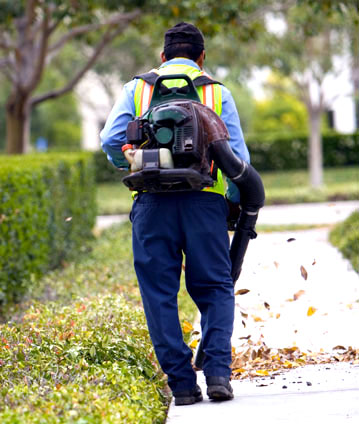 It's a timely question to ask, now that many of our streets, walkways, lawns, and gardens are carpeted by newly fallen leaves. How do we address what some of view as a blight on carefully landscaped yards? Or what can definitely be a safety hazard—as when a layer of leaves left on a walkway becomes wet and slippery from rain?
 Some of us get out our gas-powered leaf blowers, or hire guys who have these gas-powered blowers, to come out and clean up the mess.
One reader who lives in the Northgate area is not wild about leaf blowers. In fact, this reader, who works at home, has been driven—if not crazy in suburbia, then into fits of irritation—by the incredibly loud noise these machines make when they are being used to clean up neighbors' yards.
"My complaint is noise," writes this reader, who shall go by the name Leif Earacheson. "Most leaf blowers produce a penetrating, irritating, and grating, noise. There is nothing else like it – not freeways, garbage trucks, lawn mowers, chainsaws, low flying planes, garage bands, or Harleys. ... Every weekday there are various gardeners who come and violate the peace in the valley."
Mr. Earacheson contacted me to find out if others in Walnut Creek are similarly irritated--or driven crazy--by leaf blowers. He also shared his contact with Mayor Gary Skrel about the issue. It doesn't sound like the city is inclined to deal with it:
“The City discussed banning them in 2006 during the preparation of General Plan 2025," Skrel wrote Mr. Earacheson (or, it would probably be easier to write, "Leif.). "And it was acknowledged that, since the Bay Area Air Quality Management District continues to permit the use of leaf blowers throughout our region, the City of Walnut Creek will also allow their use...”
Leif has done considerable research that shows that a number of cities around the state have come to recognize leaf blowers as major pollutants of the noise and air—and have passed ordinances limiting or banning their use. Those cities include, according to Leif: Belvedere, Berkeley, Beverly Hills, Carmel, Claremont, Del Mar, Indian Wells, Laguna Beach, Lawndale, Los Altos, Malibu, Mill Valley, Piedmont, Santa Monica, Hermosa Beach, West Hollywood, Palo Alto, Portola Valley, and Sunnyvale.
I had no idea about what pollutants leaf blowers could be before Leif sent me his “dossier.”
Here’s some key points about the hazards of leaf blowers, from a document, posted on NoNoise.org. This document discusses the situation in Sacramento, our state’s capital, but it could also apply to Walnut Creek as well. This document also provides scientific and public policy statements regarding the hazards of leaf blowers.
In Sacramento’s General Plan, the normally acceptable ambient noise level in residential areas is no more than 60 decibals; levels higher than 70 decibals represents an unacceptable level.
The average blower measures 70-75 dB at 50 feet according to a manufacturer's lobbyist , thus louder at any closer distance. Leaf blowers are routinely used less than 50 feet from unconsenting pedestrians and neighboring homes that may be occupied by home workers, retirees, day sleepers, children, the ill or disabled, and pets.
Noise seems to be a form of pollution that we often overlook, when we’re considering the quality of our drinking water or energy use. But, according to this same site, “Noise interferes with communication, sleep, and work. The U.S. Environmental Protection Agency says noise degrades quality of life by impairing communication and social interaction; reducing the accuracy of work, particularly complex tasks; and creating stressful levels of frustration and aggravation that last even when the noise has ceased."
Besides noise pollution, leaf blowers also contribute to air pollution: “Leaf blower motors are inordinately large emitters of CO, NOx, HC, and PM. … Two-stroke engine fuel is a gasoline-oil mixture, thus especially toxic. Particles from combustion are virtually all smaller than PM2.5. According to the American Lung Association, a leaf blower causes as much smog as 17 cars.
As Leif asked, what do you think about leaf blowers? And about leaf blowers in Walnut Creek?
Personally, I had never seriously considered the nuisance and polluting factors of leaf blowers until Leif shared his research. I’m usually never at home when neighbors have their landscapers, who regularly use leaf blowers, come to clean up their yards. I’m at work. I understand wanting to have a leaf-free walkway, for safety reasons, especially if the resident is elderly. But wouldn't a rake do just as well for that purpose?
Another thing I don’t understand: This need people have to blow the leaves off their lawns or out of their shrubs and flower beds. Does it hurt the grass or those plants to have them covered with leaves? Could the decaying leaves actually provide natural and useful nutrients? My father always thought so. He tended to let the leaves stay.
Gardening experts? Please chime in.

Personally, I like seeing a carpet of leaves covering a lawn or shrubs. It makes me think of the beauties of autumn. If the leaves don’t hurt the underlying vegetation, then I suspect that people’s need to have pristine, leaf-free lawns, even in the heavy leaf fall of autumn, is another one of those interesting examples of human beings needing to control nature. Even if it means using an air and noise polluting leaf blower to do so.
November 20, 2009
City Council heeds neighbors' parking concerns; sends Almond/Shuey development back to Planning Commission
The City Council decided Tuesday to not approve a nine-unit residential project in the Almond/Shuey as currently planned. Instead, the council said the developer should go back to the Planning Commission and work on ways to provide more parking to residents on this half-acre site, at the Oakland Boulevard edge of the neighborhood.
The project involved nine homes that were to be built on an oddly shaped lot at the corner of Oakland Boulevard and Almond Avenue. Most of the homes would be detached, and on their own lots, including one that will consist of a duplex. Most of the homes are two-bedroom, ranging from two to three stories, and between 1,400 and 1,900 square feet. The project has been debated and discussed since 2004.
The Planning Commission approved the current plans, but not unanimously. Four commissioners praised the the developer for making several concessions and revisions to reduce its density (from 12 units to nine). Two commissioners said “no,” based on continuing concerns about insufficient onsite parking, access to the homes, and traffic issues.
With regard to concerns about density and parking, Almond/Shuey resident Tom O’Brien, who spoke at Tuesday night's meeting and has written about the project on his own website, says these “tightly-packed” homes are of a higher density than zoning permits in that neighborhood.
As I reported earlier this week, with a guest commentary by O'Brien, O'Brien has pointed out that each of these homes would feature a double-master bedroom design. As he writes on his website: “The developer has stated that one target market he has identified for the homes is young professionals who need to take in a roommate to afford their first home. Since it is reasonable to assume that a number of these homes will be occupied by unrelated adults, each of whom is likely to own a car - the neighbors believe that at least two parking spaces should be provided per unit. Throughout the hearings, staff has indicated that only 1.5 spaces per unit are called for, per the BART Proximate Parking
Ordinance."
At Tuesday's meeting, council members also expressed concerns about the project's density and the parking issue, according to minutes from the meeting. Mayor Pro Tem Sue Rainey said the project looks "very crowded," while Councilmember Bob Simmons noted the neighbors' concerns about parking. He commended the developer for doing a fine job with a difficult site, but wondered if it is entirely consistent with the character of this historic neighborhood. Finally, Mayor Gary Skrel stated he is fine with there being nine units on the site, but said that 18 parking spaces should be a requirement.
The project involved nine homes that were to be built on an oddly shaped lot at the corner of Oakland Boulevard and Almond Avenue. Most of the homes would be detached, and on their own lots, including one that will consist of a duplex. Most of the homes are two-bedroom, ranging from two to three stories, and between 1,400 and 1,900 square feet. The project has been debated and discussed since 2004.
The Planning Commission approved the current plans, but not unanimously. Four commissioners praised the the developer for making several concessions and revisions to reduce its density (from 12 units to nine). Two commissioners said “no,” based on continuing concerns about insufficient onsite parking, access to the homes, and traffic issues.
With regard to concerns about density and parking, Almond/Shuey resident Tom O’Brien, who spoke at Tuesday night's meeting and has written about the project on his own website, says these “tightly-packed” homes are of a higher density than zoning permits in that neighborhood.
As I reported earlier this week, with a guest commentary by O'Brien, O'Brien has pointed out that each of these homes would feature a double-master bedroom design. As he writes on his website: “The developer has stated that one target market he has identified for the homes is young professionals who need to take in a roommate to afford their first home. Since it is reasonable to assume that a number of these homes will be occupied by unrelated adults, each of whom is likely to own a car - the neighbors believe that at least two parking spaces should be provided per unit. Throughout the hearings, staff has indicated that only 1.5 spaces per unit are called for, per the BART Proximate Parking
Ordinance."
At Tuesday's meeting, council members also expressed concerns about the project's density and the parking issue, according to minutes from the meeting. Mayor Pro Tem Sue Rainey said the project looks "very crowded," while Councilmember Bob Simmons noted the neighbors' concerns about parking. He commended the developer for doing a fine job with a difficult site, but wondered if it is entirely consistent with the character of this historic neighborhood. Finally, Mayor Gary Skrel stated he is fine with there being nine units on the site, but said that 18 parking spaces should be a requirement.
November 19, 2009
Could the Neiman Marcus battle really, truly, finally be over?
After a resounding defeat in the November 3 election, opponents of plans to expand Broadway Plaza with a new 92,000-square-foot department store have droppped their lawsuit against the city.
The Contra Costa Times Elisabeth Nardi reports that plaintiffs Ed Dimmick, Ann Hinshaw, and Selma King asked a Contra Costa County Superior Court judge to dismiss their lawsuit, which claimed that the environmental impact report for the proposed Neiman Marcus failed to properly analyze the traffic and parking effects of the project.
Although 71 percent of Walnut Creek voters said "yes" to Measure I, allowing the new department store project to go forward, I wondered, and perhaps some others did, too, whether these election results really signaled the end of this long, ugly, costly civic battle.
Dimmick, Hinshaw, and King had proven themselves to be pretty feisty opponents to this project, and they had the deep-pocket financial backing of Taubman Centers, the owners of Sunvalley shopping mall. Surely, I thought, there would be another legal challenge to the project in their--and our--future.
Well, the Times says this request to dismiss the lawsuit means that "the last remaining stand" against Neiman Marcus has "disappeared." King acknowledged that "there isn't anything else we can do." She also patted herself and her co-plaintiffs on the back: "We fought a good fight as best as we could."
But ... the plaintiffs asked that the suit be dismissed "without prejudice"--which doesn't stop the plaintiffs from filing again in the future, if, as King said, "anything comes up at all that's going in the opposite direction (of what was approved)."
The Contra Costa Times Elisabeth Nardi reports that plaintiffs Ed Dimmick, Ann Hinshaw, and Selma King asked a Contra Costa County Superior Court judge to dismiss their lawsuit, which claimed that the environmental impact report for the proposed Neiman Marcus failed to properly analyze the traffic and parking effects of the project.
Although 71 percent of Walnut Creek voters said "yes" to Measure I, allowing the new department store project to go forward, I wondered, and perhaps some others did, too, whether these election results really signaled the end of this long, ugly, costly civic battle.
Dimmick, Hinshaw, and King had proven themselves to be pretty feisty opponents to this project, and they had the deep-pocket financial backing of Taubman Centers, the owners of Sunvalley shopping mall. Surely, I thought, there would be another legal challenge to the project in their--and our--future.
Well, the Times says this request to dismiss the lawsuit means that "the last remaining stand" against Neiman Marcus has "disappeared." King acknowledged that "there isn't anything else we can do." She also patted herself and her co-plaintiffs on the back: "We fought a good fight as best as we could."
But ... the plaintiffs asked that the suit be dismissed "without prejudice"--which doesn't stop the plaintiffs from filing again in the future, if, as King said, "anything comes up at all that's going in the opposite direction (of what was approved)."
November 14, 2009
Guest Commentary asks whether Walnut Creek staff, leaders really listen to neighborhood concerns regarding projects
This guest commentary comes from Tom O’Brien, a resident of the Almond/Shuey neighborhood, right next to downtown.
His commentary comes in advance of Tuesday night’s City Council meeting at which members will be asked to approve the construction of nine new homes, on a half-acre lot, at the Oakland Boulevard edge of this charming, historic neighborhood.
The homes, to be built on the oddly shaped lot at the corner of Oakland Boulevard and Almond Avenue, will be detached, and on their own lots, including one that will consist of a duplex. Most of the homes are two-bedroom, ranging from two to three stories, and between 1,400 and 1,900 square feet.
The project has been debated and discussed since 2004. The Planning Commission approved it, but not unanimously. Four commissioners praised the the developer for making several concessions and revisions to reduce its density (from 12 units to nine). Two commissioners said “no,” based on continuing concerns about insufficient onsite parking, access to the homes, and traffic issues.
With regard to concerns about density and parking, O’Brien, on his website about the project, says these “tightly-packed” homes are of a higher density than zoning permits in that neighborhood. He adds that each of these homes would feature a double-master bedroom design. “The developer has stated that one target market he has identified for the homes is young professionals who need to take in a roommate to afford their first home. Since it is reasonable to assume that a number of these homes will be occupied by unrelated adults, each of whom is likely to own a car - the neighbors believe that at least two parking spaces should be provided per unit. Throughout the hearings, staff has indicated that only 1.5 spaces per unit are called for, per the BART Proximate Parking Ordinance. "
You can read more about the pros and cons of this project at O’Brien’s website and in the staff report prepared by the city’s Community Development department in advance of the City Council meeting. The Contra Costa Times also covered the issue back in early October.
Meanwhile, O’Brien believes this issue raises larger questions about city responsiveness to neighborhood concerns about projects and whether the city shows favoritism to developers—over those of residents. Read his commentary, and see what you think, whether you agree with O’Brien or not.
Thanks Tom for raising this question. I know it’s something that’s on the minds of residents, in the wake of the Neiman Marcus controversy. It has also come up as a topic in the series of Community Conversations the city has been holding to prioritize its goals for the future.
Anti-neighborhood bias in Walnut Creek
The questionnaire given to all applicants for the Walnut Creek Planning Commission points out that “frequently, at a public hearing, you will hear testimony only from those opposed to the project," and asks how the applicant would respond. (I sometimes suspect that the preferred answer is that you will listen politely, but not let the ravings of those whining malcontents influence your decision to approve the project.) If the City of Walnut Creek included the neighborhoods in the planning process, public hearings might not be so confrontational. But the City has chosen a different path.
When a developer comes to the City with a new project, the developer and the City Planning staff sit down in private and craft a proposal amenable to both. Staff then works to push the project through the public hearing process. All the neighborhoods can do is to try (often futilely) to voice our concerns over staff-level decisions we never had a say in. The Parkmead neighborhood was put in this position with the Mark Scott homes. Homestead had their battle over the Homestead Hilton. Now it’s the Almond/Shuey’s turn with the “Almond Bungalows."
Without consulting the neighborhood, the City staff decided that the zoning on the lot at the corner of Almond Avenue and Oakland Boulevard could be raised, the parking didn’t need to meet current standards, and the driveway for what is essentially an Oakland Boulevard infill project could be sited on our quiet neighborhood street. From the very first public hearing, these decisions have been presented as settled, and the neighbors’ attempts to have the impacts on our neighborhood mitigated have been rebuffed. Staff has even reinterpreted City codes and ordinances in support of their position. The Design Review and Planning Commissioners have followed along with the Staff’s recommendations – after all, Staff has more credibility than those whining neighborhood malcontents – don’t they? The project has been forwarded to the City Council for final approval.
You can see what we’ve been up against to date at http://www.inertboom.org/bias. Our neighborhood’s final stand will be this Tuesday, November 17th at the City Council meeting. If you agree that neighborhood issues aren’t given a fair hearing in Walnut Creek, please come support us.
Thank you,
Tom O’Brien
Almond/Shuey neighborhood resident.
His commentary comes in advance of Tuesday night’s City Council meeting at which members will be asked to approve the construction of nine new homes, on a half-acre lot, at the Oakland Boulevard edge of this charming, historic neighborhood.
The homes, to be built on the oddly shaped lot at the corner of Oakland Boulevard and Almond Avenue, will be detached, and on their own lots, including one that will consist of a duplex. Most of the homes are two-bedroom, ranging from two to three stories, and between 1,400 and 1,900 square feet.
The project has been debated and discussed since 2004. The Planning Commission approved it, but not unanimously. Four commissioners praised the the developer for making several concessions and revisions to reduce its density (from 12 units to nine). Two commissioners said “no,” based on continuing concerns about insufficient onsite parking, access to the homes, and traffic issues.
With regard to concerns about density and parking, O’Brien, on his website about the project, says these “tightly-packed” homes are of a higher density than zoning permits in that neighborhood. He adds that each of these homes would feature a double-master bedroom design. “The developer has stated that one target market he has identified for the homes is young professionals who need to take in a roommate to afford their first home. Since it is reasonable to assume that a number of these homes will be occupied by unrelated adults, each of whom is likely to own a car - the neighbors believe that at least two parking spaces should be provided per unit. Throughout the hearings, staff has indicated that only 1.5 spaces per unit are called for, per the BART Proximate Parking Ordinance. "
You can read more about the pros and cons of this project at O’Brien’s website and in the staff report prepared by the city’s Community Development department in advance of the City Council meeting. The Contra Costa Times also covered the issue back in early October.
Meanwhile, O’Brien believes this issue raises larger questions about city responsiveness to neighborhood concerns about projects and whether the city shows favoritism to developers—over those of residents. Read his commentary, and see what you think, whether you agree with O’Brien or not.
Thanks Tom for raising this question. I know it’s something that’s on the minds of residents, in the wake of the Neiman Marcus controversy. It has also come up as a topic in the series of Community Conversations the city has been holding to prioritize its goals for the future.
Anti-neighborhood bias in Walnut Creek
The questionnaire given to all applicants for the Walnut Creek Planning Commission points out that “frequently, at a public hearing, you will hear testimony only from those opposed to the project," and asks how the applicant would respond. (I sometimes suspect that the preferred answer is that you will listen politely, but not let the ravings of those whining malcontents influence your decision to approve the project.) If the City of Walnut Creek included the neighborhoods in the planning process, public hearings might not be so confrontational. But the City has chosen a different path.
When a developer comes to the City with a new project, the developer and the City Planning staff sit down in private and craft a proposal amenable to both. Staff then works to push the project through the public hearing process. All the neighborhoods can do is to try (often futilely) to voice our concerns over staff-level decisions we never had a say in. The Parkmead neighborhood was put in this position with the Mark Scott homes. Homestead had their battle over the Homestead Hilton. Now it’s the Almond/Shuey’s turn with the “Almond Bungalows."
Without consulting the neighborhood, the City staff decided that the zoning on the lot at the corner of Almond Avenue and Oakland Boulevard could be raised, the parking didn’t need to meet current standards, and the driveway for what is essentially an Oakland Boulevard infill project could be sited on our quiet neighborhood street. From the very first public hearing, these decisions have been presented as settled, and the neighbors’ attempts to have the impacts on our neighborhood mitigated have been rebuffed. Staff has even reinterpreted City codes and ordinances in support of their position. The Design Review and Planning Commissioners have followed along with the Staff’s recommendations – after all, Staff has more credibility than those whining neighborhood malcontents – don’t they? The project has been forwarded to the City Council for final approval.
You can see what we’ve been up against to date at http://www.inertboom.org/bias. Our neighborhood’s final stand will be this Tuesday, November 17th at the City Council meeting. If you agree that neighborhood issues aren’t given a fair hearing in Walnut Creek, please come support us.
Thank you,
Tom O’Brien
Almond/Shuey neighborhood resident.
November 10, 2009
The city invites you to voice concerns about Walnut Creek's parking, including any gripes you have about those private lots!
 I have read those reports in which the city says it has enough parking, if not on the street, then in its various public and private garages around town.
You know, I can’t dispute the city’s contention. I do usually find parking in the garages, when I decide to not be lazy and to forego finding a street space right in front of a business I want to patronize. However, I rarely find parking in the garage behind Macy’s and Nordstrom, especially on Saturdays or Sundays. Consequently, I rarely shop at either store—not that I’m a big shopper anyway—but sometimes I have wanted to go to either store and have encountered a pretty frustrating parking experience.
I digress. As usual.
What are your parking pet peeves? The city's Downtown Parking Task Force is seeking your input with this survey. And, the city is asking you to comment on those private downtown lots. That's my pet peeve, as I will explain momentarily. Here is what the city says:
If you've ever come to downtown Walnut Creek, you've got an opinion on parking. Here's your chance to share it, with a quick online survey created by the Downtown Parking Task Force.From street parking to parking garages, the Task Force wants to know what works for you, and what doesn't. The answers will help the Task Force achieve its mission of "Making Parking Work in Downtown Walnut Creek.
Deadline for answering the survey is 5 p.m. Saturday, Nov. 14
In case you're interested, here are a Crazy Soccer Mom's pet peeves:
First, I think the city should align its meter holidays with all federal or state holidays—or any holidays that city offices are closed. I’ve stated this before, and I know some of you are tired of hearing me gripe about this.
Second, the city and the Downtown Business Association need to seriously look at the negative image created by the company or companies that manage the private lots around town. I have covered this perplexing private parking issue before, by citing expert legal opinion that tickets issued by these private companies have no force of law. But that doesn't stop them from trying to scare you into thinking they do.
By the way, Robert Power, the past president of the Downtown Business Association heads Regional Parking, which manages parking facilities throughout the San Francisco Bay Area, including Walnut Creek. "Our goal is to ensure customer parking, discourage illegal parking and create convenient employee parking alternatives," the company's website says.
Mr. Power, I hope you don’t take offense by this post, but I have to say that many of the complaints I hear about downtown parking centers on public confusion--and a perception among motorists--that these lots are not all that welcoming to visitorsand in fact see visitors as a way to make an easy buck.
Sorry, but that's the perception.
And, if the city and Downtown Business Association are truly serious about generating good will among patrons to their community, they will look at this issue.
Some of these private lots have meters, and those meters can be confusing. I’ve seen people at the private lot behind Peet’s coffee, on a Sunday morning, for example, trying to make sense of why those meters are in force on a Sunday morning.
Meters don’t usually operate on Sundays, right? Oh, but wait, those are city-run meters, and, but, wait, what does that sign say? These meters are private? What is that all about? What’s the difference between a private meter and a city meter? If I get a ticket, do I have to go to court? Will it hurt my driving record? For the record, no it won't. According to a report in the East Bay Express, as a private company, Regional Parking doesn't have access to confidential DMV address information. "Therefore, drivers could theoretically ignore a ticket from the company without consequence unless they later parked in a private lot patrolled by the company."
A couple evenings before Halloween, my son and I stopped in at the Spirit Store, housed in the former Mark Morris tire business at Mt. Diablo Boulevard and Locus Street. The meters there demand to be fed until 11 p.m., five hours past when the city-run meters shut down. Lots of people were trying to get in their last-minute Halloween shopping, and lots of people were trying to park in that lot.
Sure, the owners of the lot have a right to charge, but they had their enforcers out in full force, ready to write tickets to those whose meters had run out. The image was of a property owner, eager to reap whatever small profit he/she could from the crowds of Halloween shoppers.
Here, I was spending dollars in downtown Walnut Creek. And so were a lot of other people, and the parking lot owner and/or manager was trying to rake in every other last penny he/she could.
Well, if you want to fill out the survey, again, here is the link.
November 9, 2009
How would you slice up Walnut Creek’s budget pie to make the town a great place for people to live and work?
With Walnut Creek dealing with the fall-out of the recession and a decline in revenues, the city has launched what it called Community Conversations to receive input from residents on what their priorities are.
Those conversations will continue with Step 2 of those conversations. That is, workshops that will take place the week of November 30-December 6. In those workshops, participants will be given $500 (sorry, imaginary) to divvy up according to what services they see as most vital to achieving six goals that, it is believed, make Walnut Creek a desirable place to live and work.
Step 1 of these Community Conversations took place September and October. They consisted of five workshops in which 175 community members participated to create definitions for each of those six goals. Yours truly, by the way, participated in one of these workshops. Those definitions became the basis for “subgoals” that City Council members will discuss at a special meeting Tuesday.
Are you following me with this goal/subgoal thing? I hope so. Anyway, city council members will discuss these goals and subgoals at a special Tuesday meeting, starting at 5:30 p.m., and then turn the matter back over to community members for more input, which will be expressed by letting us go on our $500 budget spending spree.
Anyway here are the six goals. Each is followed by subgoals that are supposed to represent a consolidation of ideas of how community members define that goal.
A Safe Community
--Builds an informed, involved, and engaged citizenry
--Employs effective law enforcement practices and ensures visible law enforcement presence.
--Engages in broad emergency preparedness programs
--Maintains, preserves and protects public and private infrastructure
--Provides for safe access and mobility
--Provides for the social needs and well-being of its citizens
Culture, Recreation, and Learning
--Effectively collaborates with the community to jointly support cultural, recreational and learning opportunities
--Leverages partnerships with schools to offer life-long learning opportunities
--Offers cultural opportunities that attract regional visitors
--Provides high-quality, diverse, and multi-generational arts, recreational and athletic programs and venues
--Supports a vibrant downtown with amenities for gathering and a variety of shopping and entertainment venues
Economic Vitality
--Attracts robust and diverse retail and commercial businesses
--Facilitates planned development and diverse housing options
--Invests in building and maintaining a sustainable and thriving community
--Offers activities and amenities that attract regional visitors
--Partners with schools and community to foster top-rated educational opportunities
--Provides a safe, secure, and accessible community with a variety of mobility options
Effective Transportation and Mobility Options
--Ensures adequate, well-planned, and accessible public parking options
--Plans, builds, and maintains a transportation system that eases congestion and optimizes mobility
--Provides and encourages safe travel for pedestrians and cyclists
--Provides and promotes convenient access to diverse and efficient modes of public transportation
Stewardship of the Natural and Built Environment
--Facilitates environmentally sound transportation systems
--Preserves, protects, and maintains natural resources and public space
--Preserves, restores and enhances what exists today
--Promotes sustainability of the environment
--Promotes responsible development and maintenance
Strong neighborhoods and a sense of community
--Develops and encourages community involvement, participation, and pride
--Effectively collaborates and communicates with its citizens
--Offers and encourages a variety of transportation modes to connect neighborhoods and the downtown
--Promotes and sustain physically attractive neighborhoods and public space
--Promotes and supports enrichment opportunities
--Provides citizens with a safe place to live, work and play.
Next Steps in the Community Conversations
Following today’s study session, people who live or work in Walnut Creek will be invited to allocate an imaginary $500 among the goals and subgoals according to what they value most. This activity will take place over the week of November 30 through December 6 in the first floor training room at City Hall:
--Monday, November 30, 4-8 p.m.
--Tuesday, December 1, 7:30-11:30 a.m.
--Wednesday, December 2, 10 a.m.-2 p.m.
--Thursday, December 3, 4-8 p.m.
--Sunday, December 6, 10 a.m.-2 p.m.
October 8, 2009
Walnut Creek Chamber welcomes C3 Collective with ribbon-cutting ceremony

C3 Collective, the controversial medical marijuana dispensary, officially opened its doors this week with a ribbon-cutting ceremony overseen by (pictured above) CEO Brian Hyman and representatives of the city's Chamber of Commerce.
Yes, it is a delicate matter for the Chamber, celebrating the opening of a business against which the city has filed suit. The city asserts that the Oakland Boulevard dispensary is operating illegally because it is violating Walnut Creek's zoning laws. Hyman says that C3 Collective is piling up about $500 a day in fines and must pay up nearly $15,000 by the first week of November. But he adds that C3 is determined to stay open. It wants to be a part of the community and to provide vital medical services to the public, he says.
C3 Collective also serves as the city's first, openly operating reminder of the local, state, and national debate on if and when to make marijuana legal for certain purposes.
Despite the controversy, one chamber "ambassador" said that the chamber makes it a practice to welcome new businesses to the city, and new members to its organization. The C3 Collective, a nonprofit "wellness collective," joined the chamber, and is therefore entitled to a chamber ribbon cutting ceremony.
The ceremony was accompanied by live music, and plates of sandwiches, salads and cookies provided by Morucci's, the excellent Boulevard Way delicatessen. Some attendees, including chamber representatives, were delightfully surprised by the clean and chic interiors of the collective--dark, hardwood floors, modernist furniture. A few joked about whether the refreshments would also include some free samples of the featured product.
Besides being able to purchase marijuana--for the time being, for however long it can stay open--members can also enjoy "wellness services," such as yoga, meditation, and massage classes, and can find referrals for legal consulting and hospice services.
C3 Collective, which, in fact, boasts of a "chic, boutique environment," offers a variety of medical marijuana products: "top-shelf strains to suit the divergent tastes of our patients." The collective seeks to find "what is best for each individual, hoping to consistently and effectively deliver the results that each individual wants."
Chic? Boutique? Well, you couldn't expect anything less from Walnut Creek, could you?
Subscribe to:
Posts (Atom)